
Rig Systems Overview
The drilling rig is not one machine but five cooperating systems - power, hoisting, rotating, circulating, and well control - and every line on the rig floor belongs to one of them.
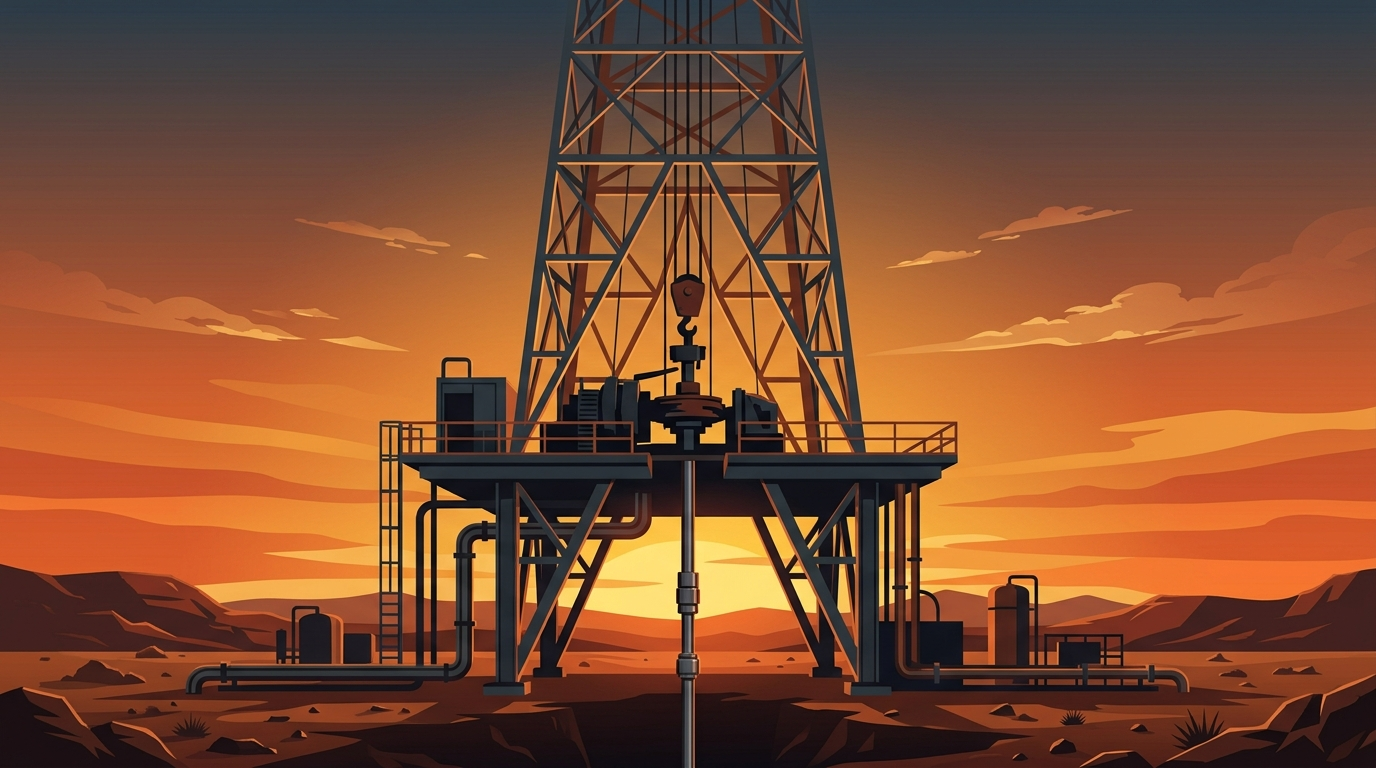
A drilling rig looks like one giant machine - but it is really five systems bolted into one structure, each doing a separate job.
From Cable-Tool to Rotary: Five Systems
Early wells were drilled by cable-tool rigs that repeatedly dropped a heavy bit to crush rock - slow and limited. Modern drilling uses the rotary method: a rotating bit at the bottom of a hollow pipe grinds and scrapes rock while fluid carries the cuttings up. A rotary rig looks like one machine, but it is really five cooperating systems - power, hoisting, rotating, circulating, and well control - and every line and pump on the rig floor belongs to one of them.
Power, Hoisting, and Rotation
The power system - diesel engines and generators - drives everything else, running the drawworks, the rotary or top drive, and the mud pumps. The hoisting system lifts and lowers the drill string. Its backbone is the derrick (the tall tower); the drawworks is the hoisting winch that spools the drilling line; and a block-and-tackle of crown block and travelling block multiplies the line's pull so a single line can lift the heavy string. The rotating system turns the bit. On an older rotary-table rig the rotating table drives a kelly bushing that grips and turns a square kelly, which in turn rotates the drill string; a swivel hangs above from the travelling block to carry the string's weight and admit mud while letting everything below it spin. On a modern top-drive rig a motor hangs from the travelling block and turns the string directly from the top, which is faster and safer for many operations.
The circulating system moves drilling fluid - mud - in a continuous loop. Mud pumps draw mud from the mud pits and push it through the standpipe, down the inside of the rotating drill string, and out the bit nozzles at the bottom. The mud then carries the cuttings back up the annulus - the space between the drill string and the borehole wall - to the surface, where shale shakers shake the cuttings out before the cleaned mud returns to the pits. Down the string and up the annulus: that closed loop is the heart of rotary drilling.
The Well-Control System (by Name Only)
The fifth system, well control, exists to stop formation fluids from entering the well uncontrollably. Its hardware is the blowout preventer (BOP) stack, a set of large valves mounted under the rig floor that can close around or over the drill pipe to seal the well. We name it here so the rig's five systems are complete; the principles of how and why well control works - primary and secondary barriers, what a kick is - are covered later in this module.
Check your understanding
- A rotary rig is five cooperating systems: power, hoisting, rotating, circulating, and well control.
- Hoisting (derrick, drawworks, block-and-tackle, travelling block) lifts the string; rotating turns the bit via a rotary table and kelly or a top drive.
- The circulating system pumps mud down the drill string and up the annulus to carry cuttings; the BOP stack is the well-control hardware, covered in detail later.