
What Is a Blockchain?
Strip away the hype and a blockchain is one simple idea: a shared list that's very hard to tamper with.
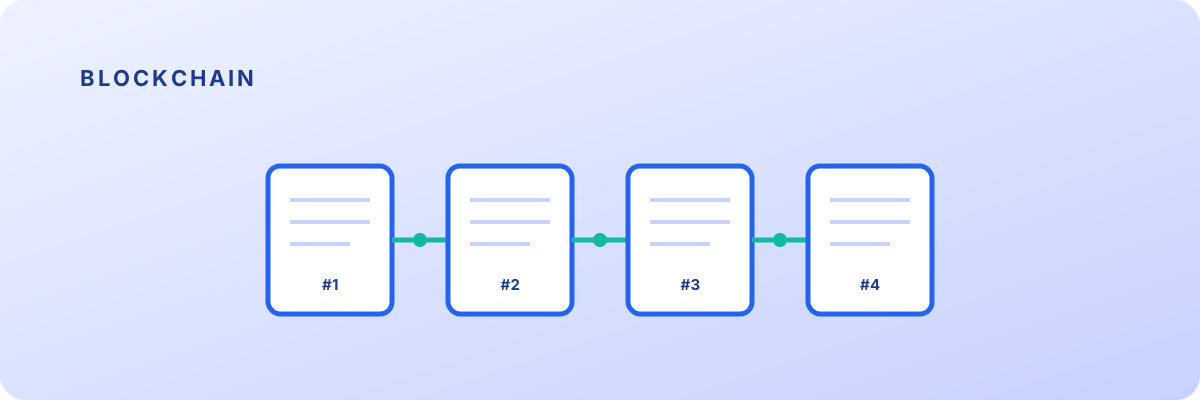
A shared list, chained together
Forget coins and prices for a moment. At its core a blockchain is just a list of records — grouped into 'blocks' — that is copied and kept in sync across many computers at once. No single company owns the master copy; everyone holds the same list.
What makes it special is how the blocks are joined. Each block carries a hash — a short digital fingerprint calculated from its contents — and every block also stores the fingerprint of the block before it. That's the 'chain'.
Why many copies matter
One tamper-evident list on your own computer isn't worth much — you could just rewrite the whole thing. The power comes from many independent copies. To change the shared record, you'd have to alter it on a majority of those computers at the same time, faster than everyone else — which, on a large network, is extremely hard. How all those computers agree on one version of the list is called consensus, a topic of its own.
Where you've heard of this
Bitcoin and Ethereum are the best-known systems built on blockchains — each is, at heart, a shared chained ledger like the one above, plus rules for how new blocks are added. Blockchains are also used to explore things like supply-chain tracking and record-keeping. This lesson is about the data structure and how it works — not about any coin's value.
Check your understanding
- A blockchain is a shared list of records ('blocks') copied across many independent computers.
- Each block stores a hash (fingerprint) built from its data and the previous block's hash — that's the chain.
- Tampering with one block breaks the fingerprints of every block after it, so it's obvious.
- Many independent copies make the shared record very hard to alter — the basis of its resilience.